How a Slip-and-Fall Lawsuit Works: What You Need to Know
Personal Injury
If you’ve been hurt after slipping or tripping on someone else’s property, you’ve probably started wondering what a slip-and-fall lawsuit actually involves — what you’d need to prove, how long it takes, and whether it’s even worth pursuing. It’s a more complicated process than most people expect, and a lot of the popular assumptions about it don’t hold up. Here’s a realistic, plain-language look at how these cases actually work.
A slip-and-fall lawsuit is a type of personal injury claim built around “premises liability” — the legal idea that property owners have a responsibility to keep their space reasonably safe for people who come onto it. That doesn’t mean an owner is automatically at fault every time someone falls. It means the injured person generally has to show the owner was negligent in some way: that they knew, or reasonably should have known, about a dangerous condition, and didn’t fix it or warn people about it in a reasonable amount of time.
That last part trips a lot of people up. Simply falling isn’t enough on its own. What usually matters is whether the hazard was something the property owner should have caught and dealt with. A spill that’s been sitting on a grocery store floor for twenty minutes with no warning sign is a very different situation, legally, than one that happened thirty seconds before someone walked through it.
The Kinds of Hazards That Usually Come Up
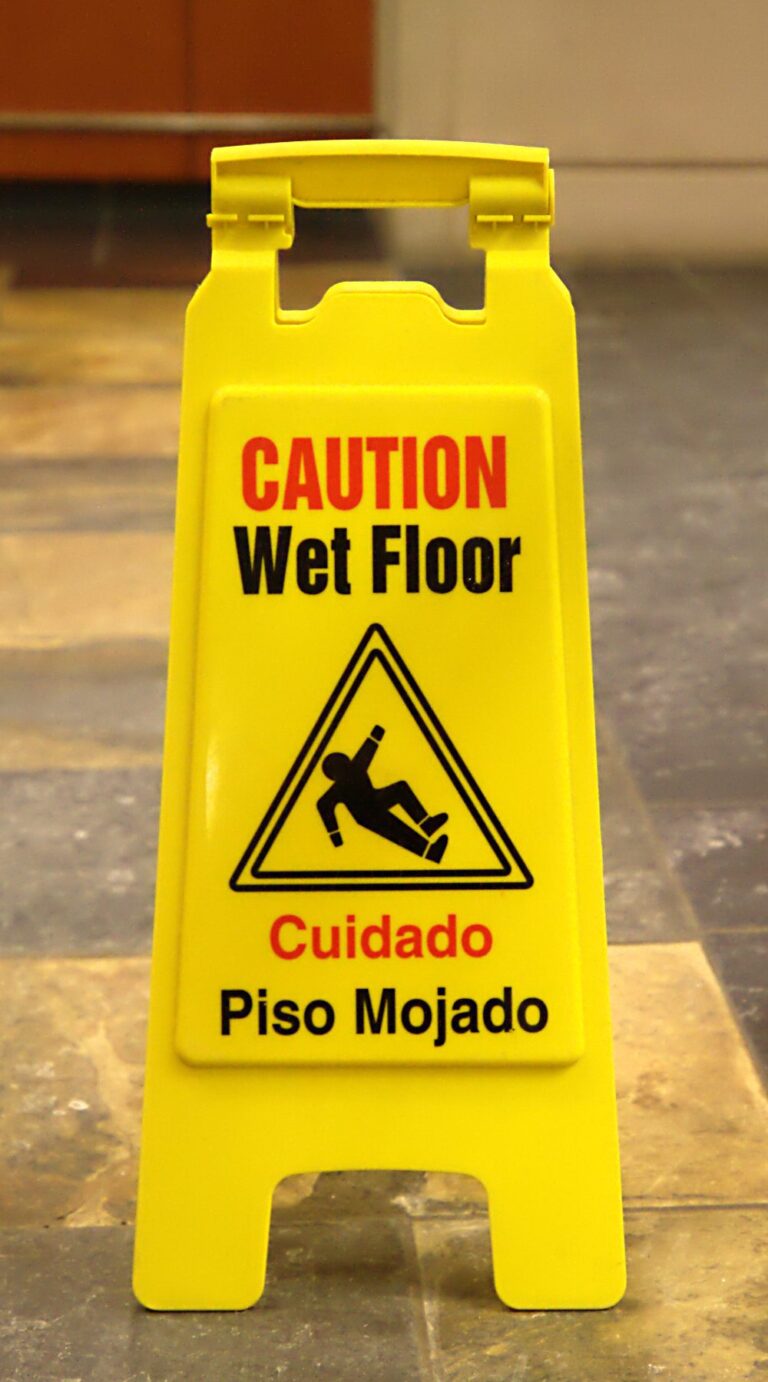
Most slip-and-fall cases trace back to a fairly predictable set of hazards: wet floors without warning signs, icy sidewalks or parking lots that weren’t salted or cleared, cluttered store aisles, torn carpeting or loose mats, uneven pavement, and poorly lit stairwells. If you’re trying to figure out whether you might have a case, it often helps to start by identifying which of these categories your situation falls into, since that shapes what kind of evidence matters most.
Why Timing Matters So Much
One of the central questions in almost every slip-and-fall case is how long the hazard existed before the accident. Lawyers call this “notice” — did the property owner actually know about the danger, or should they have discovered it through reasonable inspection? A hazard that’s been there for hours or days is much easier to build a case around than one that appeared moments before someone got hurt.
What the Lawsuit Process Actually Looks Like
Despite the name, most slip-and-fall lawsuits don’t end up in a courtroom. The typical path starts with a claim filed against the property owner’s insurance, often after a demand letter laying out what happened and what compensation is being sought. From there, most cases are negotiated and settled directly with the insurance company. A smaller share of cases that can’t be resolved this way move into formal litigation — meaning a lawsuit is actually filed in court — and an even smaller number make it all the way to trial. Settlement negotiations can happen at almost any stage, even after a lawsuit has technically been filed.
Timelines vary a lot depending on how clear-cut the liability is, how serious the injury was, and whether the insurance company disputes the claim. Straightforward cases can resolve in a few months; disputed or more serious cases can take a year or more, especially if they go through litigation.
Building the Case: What Evidence Actually Helps
Because these cases often come down to disputed facts, documentation carries a lot of weight. Photos or video of the hazard — taken as close to the time of the fall as possible — tend to be some of the most persuasive evidence, since conditions get cleaned up or repaired quickly. Incident reports filed with the property or store manager, contact information for anyone who witnessed the fall, and medical records connecting the injury to the incident all help build a more complete picture.
Comparative Fault: Why Your Own Actions Matter Too
Most states apply some version of “comparative fault,” which means your own behavior at the time of the fall can affect your compensation. If you were distracted, moving quickly, or ignored a visible warning sign, an insurance company or court may find you partly responsible — and depending on the state’s rules, that can reduce what you’re able to recover, or in some cases eliminate the claim entirely if you’re found more than half at fault.
What Compensation Typically Covers
When a slip-and-fall claim succeeds, compensation is generally meant to cover the real costs tied to the injury — medical bills, lost income if you couldn’t work, and compensation for pain and disruption to your life. What’s actually recoverable depends heavily on the state and the specifics of the situation, so it’s hard to generalize beyond that.
If You’re Ever in This Situation
A few things tend to matter most in the moments after a fall: get medical attention if you need it, report what happened to the property owner or manager, take photos before anything changes, get the names of anyone who saw it happen, and hold onto any medical records that follow. None of this guarantees a particular outcome, but it keeps your options open.
Frequently Asked Questions
Do I actually need a lawyer for a slip-and-fall lawsuit?
Not always. Smaller, clear-cut claims are sometimes resolved directly with a property owner’s insurance without much back-and-forth. But if the injury is serious, liability is disputed, or the insurer denies the claim, legal help tends to make a real difference.
What happens if I was partly at fault for the fall?
In most states, being partly at fault reduces your compensation rather than wiping it out completely — though the exact rules differ a lot depending on where you live.
How long does a typical slip-and-fall lawsuit take?
It depends. Straightforward claims can wrap up in a few months through insurance negotiations, while disputed cases that go through formal litigation can take a year or longer.
Related Reading
Photo credit: see Image Credits.